
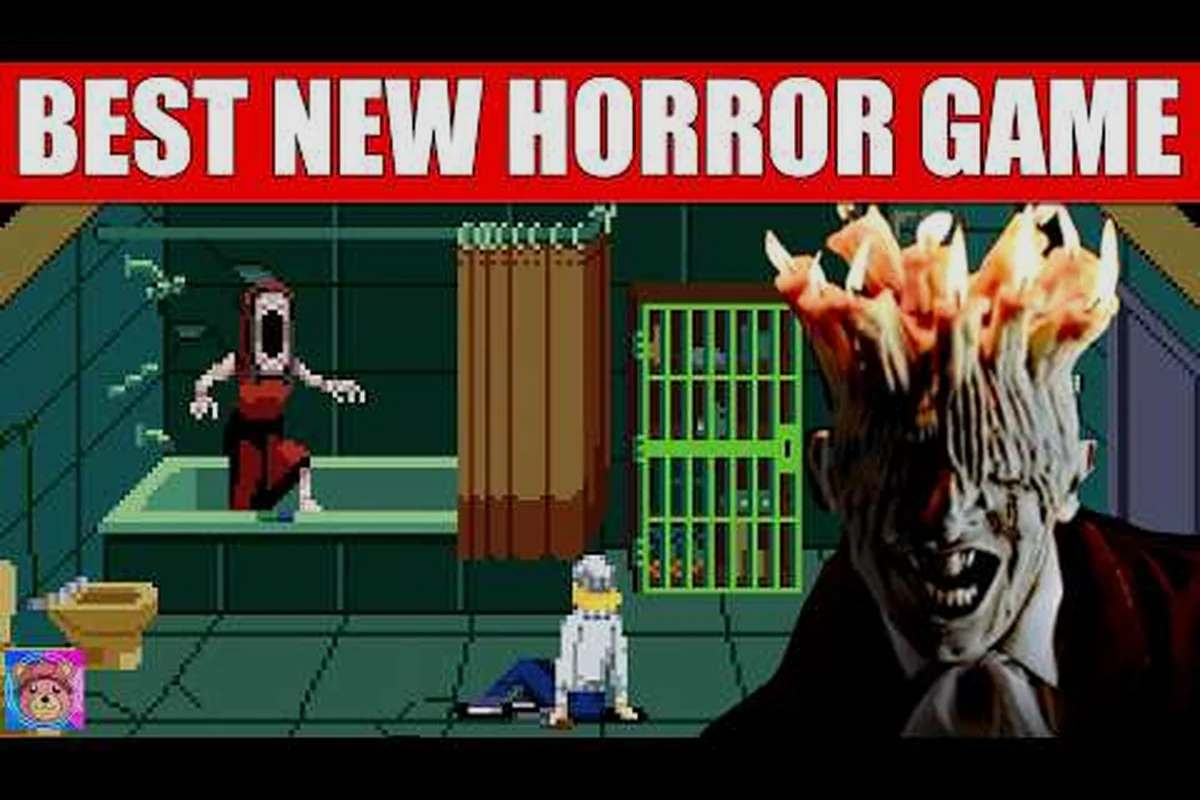
The Tenebris Somnia creature masks sit at the exact collision point where an Argentine film crew's latex workshop meets an 8-bit nightmare engine, and understanding that pipeline explains every grotesque thing that lurches through Julia's apartment. This guide walks through the prop-to-sprite translation that defines the Tenebris Somnia practical effects monsters and unpacks how the Tenebris Somnia monster design studio split its work between cinema and retro horror.
The Two-Style Horror Concept Behind Tenebris Somnia's Creatures
Tenebris Somnia's signature trick is layering live-action practical-effect sequences on top of a retro 2D adventure world, and the Tenebris Somnia creature masks are the hinge between those two mediums. The split design lets the developers, led by Dajana Tovilovic and a Buenos Aires-based film crew, deliver a Silent Hill-flavored atmosphere through two completely different visual languages that must read as the same monster.
The Tenebris Somnia enemy art therefore exists in two parallel libraries. One is shot on a real Argentine set with real actors, real latex, and real lighting rigs, and the other is pixel-rendered to evoke the 8 or 16-bit consoles the game is paying homage to. According to the Tenebris Somnia Steam page, the cinematics are made with practical effects by a professional award-winning film crew from Argentina, which is exactly the kind of provenance that gives the creature masks their skin-crawling texture.
Why Pixel Monsters Borrow From Latex Originals
A creature designed first as a wearable prop gives the sprite artist a real silhouette to trace, an actual color palette pulled from human skin tones and stage blood, and a movement vocabulary that already reads as inhuman. The Tenebris Somnia pixel monsters are not drawn from imagination alone; they are reductions of a physical thing that already breathes, sweats, and casts a shadow on a Buenos Aires soundstage. The pipeline below shows how that reduction happens.
| Pipeline Stage | Live-Action Asset | Pixel Asset | Key Constraint |
|---|---|---|---|
| Concept sketch | Storyboard frame | Storyboard frame | Same creature silhouette |
| Sculpture | Clay maquette | N/A | Defines anatomy |
| Latex mask | Foam latex skin | N/A | Defines palette |
| On-set shoot | HD video plate | N/A | Defines lighting |
| Sprite trace | HD reference | 16x16 to 64x64 sprite | Limited palette |
| Animation | MoCap actor | Frame-by-frame | Same key poses |
This two-track workflow is what makes the Rock Paper Shotgun preview describe the game as "an 8-bit horror adventure with a flashy twist" — the live-action layer is the flashy twist, and the pixel layer is the survival horror gameplay the player actually controls.
Inside the Tenebris Somnia Monster Design Studio
The Tenebris Somnia monster design studio is not a single room but a distributed collaboration between game developers in Buenos Aires, the Saibot Studios production house, and a roster of practical-effects artists whose day jobs include independent horror shorts. The studio pipeline is closer to a low-budget film crew than a typical indie game art team, which is why latex, silicone, and mechanical rigs dominate the monster vocabulary.
Roles and Responsibilities
A creature's journey from script to screen passes through several distinct specialists, and each one leaves a fingerprint on the final mask. The table below shows the typical crew composition and what each role contributes to the Tenebris Somnia creature masks.
| Role | Primary Output | Contribution to Mask |
|---|---|---|
| Concept artist | Pencil + digital render | Establishes creature silhouette |
| Sculptor | Clay or oil-based maquette | Defines volume and bone structure |
| Foam latex technician | Skin membrane | Adds wrinkles, pores, stretch |
| Hair puncher | Stranded hair | Sweat, veins, matted tufts |
| Mechanical FX | Cable-driven rigs | Twitching jaws, blinking eyes |
| Pixel artist | Sprite sheet | Translates mask into gameplay form |
| Sound designer | Field recordings | Breath, skin stretch, bone crack |
Tooling and Materials
Foam latex is the workhorse material because it moves like skin, takes makeup like skin, and survives the long hours of a stage shoot without flaking. Silicone is reserved for parts that need to glisten under hot stage lights, and mechanical rigs are reserved for the few masks that need a moving mouth or a triggered pop-out eye. These material choices propagate downstream into the Tenebris Somnia monster art because the pixel artist has to suggest those same wet and dry surface qualities with as few as 16 colors per sprite.
The studio also shoots reference plates on a green screen so the pixel team can match the angle, shadow direction, and color temperature of the live-action footage frame by frame, which is a level of fidelity most retro-styled horror games never bother with.
The Latex Workshop: How Creature Masks Are Built
Every Tenebris Somnia creature mask begins life as a clay sculpture on an armature, and the sculpture is what locks in the silhouette the pixel team will later reduce. A mistake at this stage is expensive because a misread jawline or an off-center eye socket will haunt every sprite that references it.
Sculpting and Mold Making
The sculptor starts with a wire-and-foil skull that matches the actor's head measurements, then builds up the face features in water-based clay. Once the design is approved, a plaster or silicone mother mold is poured around the clay, the clay is cleaned out, and the cavity is ready to receive foam latex. This step typically takes three to five working days per hero creature, and the studio runs several masks in parallel to keep the shoot moving.
Foam Latex Pouring and Curing
Foam latex is a frothed mixture of liquid latex, a foaming agent, and a curing chemical that solidifies the bubbles into a spongy skin. The artist pours the foam into the mold, bakes it in a temperature-controlled oven, and peels the resulting membrane out once it has cooled. The skin is then trimmed, painted from the inside with a thin layer of colored latex to cancel translucency, and detailed on the outside with alcohol-activated pigments.
Detailing, Hair, and Teeth
The mask comes off the mold as a blank face, and the artist now has to make it look like it grew on a body. Creases are stippled with a soldering iron, veins are painted on with a fine brush, and hair is punched into the latex one strand at a time using a needle tool. Teeth and fingernails are cast in acrylic and glued on after the paint is dry, and contact lenses are fitted last so the actor can see and the iris color reads on camera.
| Layer | Material | Purpose | Time to Apply |
|---|---|---|---|
| Skin membrane | Foam latex | Wrinkles, pores, stretch | 1 day |
| Base paint | Liquid latex tint | Cancel translucency | 2 hours |
| Detail paint | Alcohol-activated pigment | Veins, bruising, rot | 4 hours |
| Hair | Stranded nylon or yak hair | Sweat, matting, age | 6 hours |
| Teeth/nails | Cast acrylic | Bite, scratch | 1 hour |
| Eyes | Custom contact lens | Uncanny stare | 30 minutes |
This detailing stage is also where the Tenebris Somnia practical effects monsters start to feel like a coherent universe, because the same blood palette, the same ash gray, and the same jaundiced yellow show up on every mask regardless of which artist poured it.
Translating Latex Into 8-Bit Pixel Sprites
Once a mask is performance-ready, the Tenebris Somnia pixel monsters go through a separate art pipeline that ends in a sprite sheet small enough to draw on a 1990s console but expressive enough to convey a body horror performance. The translation is never a straight trace because a single 16x16 sprite cannot hold the texture information of a sculpted face, so the pixel artist has to pick which details to amplify and which to drop.
The Reductionist Art Direction
The art team works with a deliberately small palette per creature, often only 8 to 16 unique colors, and forces every sprite to read as the same monster across idle, walk, attack, and death frames. The latex mask's wrinkles, which took hours of stippling on set, get compressed into two or three darker pixels along the cheekbone, and the careful eye work is reduced to a single red pixel for the iris.
Frame-by-Frame Animation
The Tenebris Somnia monster art in motion is built frame by frame rather than through skeletal rigging because the team wants the same jerky, slightly inhuman cadence that the live-action masks exhibit when a foam-latex face twitches under stage light. The result is a creature that moves like the prop it came from, which is exactly the kind of uncanny callback the studio is after.
| Sprite Type | Frame Count | Palette Size | Main Source Reference |
|---|---|---|---|
| Idle | 2-4 | 8 colors | Mask front, neutral expression |
| Walk | 6-8 | 12 colors | Mask profile, set lighting |
| Attack lunge | 4-6 | 16 colors | Mask with jaw open, teeth visible |
| Death | 3-4 | 6 colors | Mask with blood detail removed |
| Hit reaction | 2 frames | 8 colors | Mask with recoil, eyes wide |
Palette Locking Across Mediums
A recurring problem in games that mix live action with pixel art is color drift, where a creature looks orange in the cinematic and red in the gameplay. The studio solves this by sampling five anchor colors from the on-set reference plate and locking the sprite palette to those exact RGB values, so the Tenebris Somnia creature masks you see on stage read as the same flesh tone as the Tenebris Somnia pixel monsters you fight in the apartment.
How the Creature Masks Affect Gameplay Encounters
The monsters in Tenebris Somnia are not just visual set pieces; they are combat encounters the player has to survive while solving adventure-game puzzles, and the design of every Tenebris Somnia creature mask is influenced by how the player will engage it in the pixel layer. The latex build dictates the silhouette and movement vocabulary, the sprite build dictates the hitbox and attack frames, and the two together shape the encounter.
Encounter Design Tied to Mask Performance
Encounters are timed around the same twitchy animation cadence the masks exhibit on stage, so a creature that snaps its head on the shoot day will snap its sprite the same way in combat. This commitment to a single movement source is what makes the Tenebris Somnia practical effects monsters feel like a coherent threat rather than a collection of unrelated art assets, and it is also why players who want to study a full roster can check the enemy list breakdown.
Telegraphing Attacks Through Silhouette
Because the pixel sprites are reductions of the latex masks, the silhouette alone tells the player what is about to happen. A long, drooping arm that looks wet on stage reads as a swing arc in the pixel layer, and a hunched shoulder in the mask translates to a tell frame the player can dodge. The table below maps some common mask features to the gameplay telegraphs they produce.
| Latex Mask Feature | Sprite Equivalent | Player Read |
|---|---|---|
| Exposed teeth | White pixel row | Bite attack incoming |
| Twitching eye | Single red pixel blink | Stun or scream follow-up |
| Drooping arm | Extended sprite frame | Wide swing arc |
| Wet skin | Glossy highlight pixels | Damage over time aura |
| Hunched back | Tall idle sprite | Charge attack on next step |
Lore Hooks Built Into the Costume
The mask design team also sneaks narrative information into the costumes, and curious players who want the full story can dig into the creature lore guide for the deeper readings. A mask with ceremonial paint around the eyes hints at a cult backstory, a mask with hospital gauze implies a medical experiment gone wrong, and a mask with a sewn-shut mouth suggests a silenced victim. These details carry over to the pixel layer as colored trim on the sprite, so the same lore read is available whether the player is watching the cinematic or the gameplay.
Frequently Asked Questions
Who actually built the Tenebris Somnia creature masks?
The creature masks were built by an Argentine practical-effects team working under Saibot Studios and the game's Buenos Aires-based production crew. The Tenebris Somnia Steam page confirms the live-action sequences were shot by a professional award-winning film crew from Argentina, and the prop work was handled in-house by the same unit that sculpted the maquettes and poured the foam latex.
How closely do the pixel monsters match the live-action masks?
The pixel monsters are direct reductions of the live-action masks rather than independent redesigns. The art team samples anchor colors from the on-set reference plate and locks the sprite palette to those RGB values, so a creature that reads as jaundiced yellow on stage will read as the same jaundiced yellow in the pixel layer. This is part of why the Rock Paper Shotgun preview describes the game as two visual styles thrust into the same frame.
What materials are used for the Tenebris Somnia practical effects monsters?
The masks are mostly built from foam latex because it moves like skin and survives long stage shoots without flaking. Silicone is used for parts that need to glisten under hot lights, and mechanical cable rigs are used for the few masks that need a moving jaw or a triggered eye. Teeth and fingernails are cast in acrylic, hair is punched in strand by strand, and the final paint layer is built from alcohol-activated pigments layered over a tinted base coat.
Where does the monster art direction come from?
The art direction comes from the Buenos Aires production team and the Saibot Studios film crew, with the concept stage drawing on body horror traditions like Cronenberg and early Silent Hill. The pixel art layer is handled by the game's core development team, who reduce the live-action designs into limited-palette sprites while keeping the same silhouettes, movement vocabulary, and color anchors. Players interested in the toughest encounters can see how this art direction plays out in the boss fight guide.
Are the creature masks reused across multiple monsters?
The base sculpts are sometimes reused with different paint, hair, and denture treatments to keep the production moving, but each hero monster gets its own dedicated sculpt. The shared material vocabulary — foam latex, acrylic teeth, nylon hair — is what makes the monster roster feel like it belongs to the same world even when individual creatures are built by different artists on different days.