
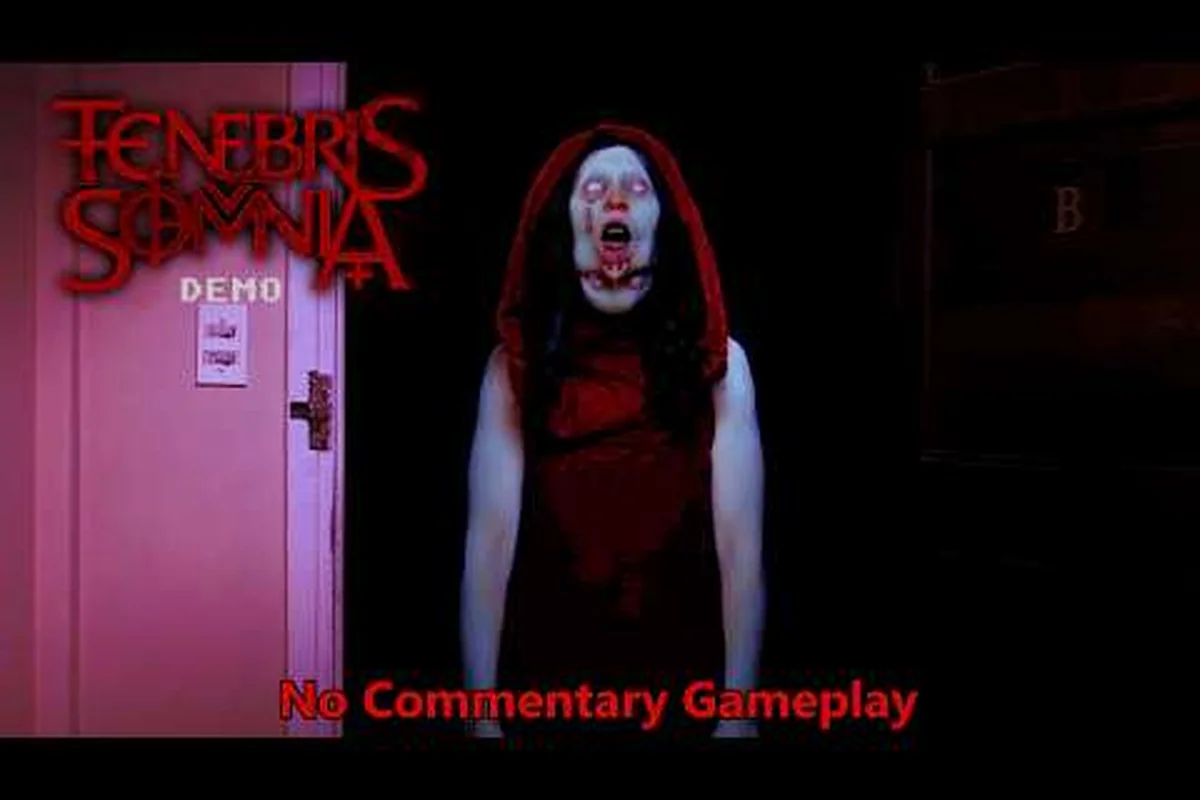
If you have just picked up Tenebris Somnia and felt the 8-bit apartment swallow you whole before the first FMV kicked in, this is the entry ramp you actually need. New players keep asking tenebris somnia where to start because the game splits its identity between retro exploration and live-action cutscenes, and the early hour punishes hesitation. The good news is that the first act is a designed tutorial disguised as a story: Julia's return to her ex's apartment teaches inventory, puzzle solving, and combat one room at a time, and the Tenebris Somnia on Steam page frames the early game around "survive, solve, and watch" — exactly the order this guide will follow.
Understanding the Two-Frame World of Tenebris Somnia
Before you can plan tenebris somnia where to start with any confidence, you need to understand the design trick the game is built on. Tenebris Somnia renders its exploration in a chunky, 8-bit-inspired pixel style, and then it interrupts you with full-screen live-action sequences filmed by an award-winning Argentine crew. Those cinematics are not decoration; they are the real story layer. A puzzle on screen, a clue on the floor, and a Latin American apartment hallway on a projector are all the same narrative beat, and learning to read both is the first skill any tenebris somnia complete guide has to teach.
According to the Rock Paper Shotgun preview, the pixel layer "thrusts" into the same frame as the FMV layer, and the tension between Julia's muted retro world and her ex's filmed memories is what gives the game its hooks. That means your first job is not to grind, but to retrain your eyes. When the pixel world slows down and the music swells, you are about to be pulled into a live-action sequence. Resist the urge to skip — the FMVs drop puzzle flags, emotional cues, and item hints that the rest of the game assumes you caught.
| System Layer | Visual Style | What It Teaches | What You Should Do |
|---|---|---|---|
| Pixel exploration | 8/16-bit 2D | Inventory, puzzles, combat | Read every shelf, pick up anomalies |
| Live-action FMV | Filmed, practical effects | Story, character, hidden clues | Watch, note props, listen to dialogue |
| Audio cues | Retro chiptune + cinematic score | Enemy proximity, scene shifts | Lower music, raise dialogue volume |
| Inventory | Menu grid | Combine items, heal, equip | Combine before exploring, never over-encumber |
For most players, this tenebris somnia gameplay guide should be approached in roughly 90-minute arcs. The first hour is the apartment. The second is the building. The third hour starts to bleed into the wider world and the difficulty curve. If you can survive the apartment loop with your sanity and your items intact, the rest of the game opens up to you on much friendlier terms.
The First 30 Minutes: Apartment Puzzles and Survival Basics
The first chunk of the game is the cleanest answer to the question tenebris somnia where to start. Julia arrives at her ex's place, and you are dropped into a small, two-room layout with a broken-glass floor, a red gloop stain, and a stack of occult books. According to the Rock Paper Shotgun preview, the apartment is "full of broken glass, anomalous red gloop and creepy occult books," and each of those three visual elements is a flag for a tutorial that the game never explicitly labels.
Here is the order in which the apartment actually wants you to play, and the order that any tenebris somnia complete guide should respect: this sequence is built around the Apartment Puzzles loop, which gates your first FMV trigger, your starting Makeshift Cutter weapon, and the memory flag the rest of the prologue keys off of, so following it on a fresh save is the difference between a clean first 30 minutes and a chip-damage spiral that compounds once the camera turns live-action.
-
Sweep the floor — pick up the Broken Glass Shard before anything else. The shard is a defensive item and also a future crafting reagent, and leaving glass on the floor damages Julia every few steps.
-
Read the books — interact with the Occult Tome on the desk. Reading the tome unlocks your first symbolic clue and primes the FMV that will trigger when you enter the bedroom.
-
Inspect the red gloop — use a mirror interaction on the Red Anomaly in the bathroom. This unlocks the "memory" flag that the first FMV later references.
-
Combine the key and shard — the apartment key in your inventory can be combined with the glass shard to create a Makeshift Cutter, which opens the locked drawer.
-
Trigger the first FMV — enter the bedroom, face the camera, and let the live-action sequence play out without skipping. This is the moment the game's two visual languages officially meet.
A table summarizing the apartment loop is below, and it doubles as a checkpoint list for any tenebris somnia where to start run: first-time players typically miss at least two of these items, and each miss feeds into a difficulty spike roughly 20 minutes later in the FMV trigger window — the missing Red Anomaly interaction in particular cascades into a dead memory flag that blocks the Makeshift Cutter sequence and forces a reload of the Apartment Puzzles loop.
| Apartment Item | Location | What It Does | Common Mistake |
|---|---|---|---|
| Broken Glass Shard | Hallway floor | Defense + crafting | Walking past it and taking chip damage |
| Occult Tome | Desk by window | Unlocks first clue | Reading passively without item focus |
| Red Anomaly | Bathroom mirror | Triggers memory FMV | Treating as decoration |
| Apartment Key | Ex's jacket | Base key item | Combining it before finding the cutter |
| Makeshift Cutter | Crafted | Opens locked drawer | Skipping the drawer and losing the first weapon |
If you keep dying in the apartment, the problem is almost always one of two things: you are skipping the FMVs to save time, or you are not combining items before you leave the first room. Both are fixable in a single retry, and both pay off for the rest of the run.
Combat, Inventory, and the "Three Slots" Rule
The next question every tenebris somnia gameplay guide needs to answer is when to fight and when to run. The combat system is deliberately chunky, in keeping with the 8-bit aesthetic. Julia can equip one melee weapon, one throwable, and one healing item at any time, and the rest of your inventory is bulk storage. New players tend to fill the bulk storage and never touch the active slots, which is exactly backwards. The active slots are the survival layer; the bulk storage is flavor.
The rule of thumb is to keep exactly three "live" items on Julia at all times during the first building chapter, because Tenebris Somnia's inventory UI hides anything stored in the bulk grid behind an extra confirmation prompt — and in a 1-hit-kill hallway, that half-second delay is what gets you grabbed by a Stalker. Treat the three slots as a rotation, not a loadout: swap to the Wrench the moment a room spawns more than two melee enemies, then rotate back to the Rusty Kitchen Knife once the room is clear, because the Wrench's 3-hit combo locks you in place long enough to eat a free hit if no one is pressuring you.
-
One weapon that you have actually tested on a real enemy.
-
One throwable that you understand the trajectory of.
-
One healing item that you know the exact heal value of, in hearts, for.
This is also where the Tenebris Somnia demo release coverage is worth checking, because the Steam Next Fest build deliberately expanded the early-game enemy roster to teach this exact rule. According to the official Steam news for the demo, the update added new scenarios, enemies, items, and weapons to the early game so players could learn the combat loop in chunks rather than in a single 20-minute tutorial. Treat the demo as a sandbox for your loadout, and the full game will feel much more manageable.
| Slot | Beginner Pick | Mid-Game Pick | When to Swap |
|---|---|---|---|
| Melee | Rusty Kitchen Knife | Wrench (crafted) | When an enemy starts two-shotting you |
| Throwable | Glass Shard | Heavy Statue Fragment | When you have 3+ in storage |
| Healing | Adrenaline Shot | Herbal Bandage | When HP < 3 and a save is far |
A common pattern reported by players in early builds is the "panic heal" — entering a new room, getting hit, and immediately using your healing item before checking whether the room is even hostile. The game punishes this because healing is animation-locked. The fix is to enter each new doorway with your weapon drawn and your throwable in the off-hand, and to heal only after you have confirmed a safe corner. This small habit is the single biggest difference between a struggling first hour and a confident third hour.
Reading the FMVs Without Spoiling Yourself
The biggest mistake a tenebris somnia release guide can warn you about is treating the FMVs as cutscenes to skip. The cinematics in this game are not rewards for finishing a chapter; they are an alternate camera that the developers are running in parallel. The story is told twice: once in 8-bit and once in live action, and the two threads meet at specific, scripted points.
| FMV Trigger | Pixel Context | What to Watch For | Reward for Paying Attention |
|---|---|---|---|
| Bedroom memory | After reading Occult Tome | A prop on the nightstand | First weapon blueprint |
| Bathroom reflection | After mirror interaction | Symbol carved into the tile | Puzzle flag for Chapter 2 |
| Hallway phone call | After picking up the ringing phone | Caller's tone, not their words | Skip button, not a clue |
| Kitchen flash | After first enemy kill | Item on the counter | Healing item drop |
| Ex's door | After solving apartment | Door knob position | Branching dialogue |
Notice that the phone call is the only trigger on this list where the right answer is to not overthink it. Community reports consistently flag the phone call as a fake-out: the ringtone is loud, the FMV is short, and nothing in the apartment changes after the call. New players burn adrenaline here. The remaining four triggers are real, and skipping them is one of the cleanest ways to softlock a puzzle three rooms later.
If you want a hands-on walkthrough of where each FMV leads in the wider game, the Tenebris Somnia platinum walkthrough maps each trigger to a checkpoint and a collectible, and is the most efficient way to plan a second run once you understand the loop.
Building, Branching, and What to Do After the Apartment
Once the apartment is solved, Tenebris Somnia opens the building, and this is where a tenebris somnia complete guide needs to stop holding your hand. The building is the first place the game offers you a meaningful choice, and the way you handle that choice shapes the rest of your run.
Each branch feeds directly into a distinct second-hour of the Tenebris Somnia apartment-to-building pipeline, so the choice you make in the opening building actually dictates which key items, FMV sequences, and enemy densities you will encounter in the Building → Branching → Apartment loop. Picking the neighbor route, for instance, routes you past the manager's office entirely and skips the early wrench, which then reshapes the wrench route you would normally follow in the Tenebris Somnia item locations guide.
-
Help the neighbor — a soft, narrative-heavy branch that gives you a key to the rooftop and a sympathetic FMV. Recommended on a first run.
-
Ignore the neighbor — unlocks a faster combat route with two extra enemies, but you keep an extra healing item. Good for replay value.
-
Report the noise — a hostile branch that opens the building manager's office and the first real boss. Hard, but it gives you the wrench early.
The table below summarizes what each branch actually changes in your first hour after the apartment, so you can read the gameplay-guide value of every option at a glance before committing to the neighbor, ignore, or report path in your Tenebris Somnia run.
| Branch | Extra Enemies | FMV Content | Reward on First Run | Difficulty Shift |
|---|---|---|---|---|
| Help neighbor | 0 | Long, emotional | Rooftop key, story FMV | Easiest |
| Ignore neighbor | 2 | Short, tense | Extra healing item | Medium |
| Report noise | 4 (one miniboss) | Very short | Early wrench, manager's map | Hardest |
A useful tenebris somnia gameplay guide habit is to pick the branch that matches the platform you are on. On PC with a controller, the neighbor branch is forgiving and lets you learn the FMV rhythm. On Switch 2 or Steam Deck in handheld mode, the ignore branch keeps the screen uncluttered and the inventory smaller. The hard branch is genuinely hard, and is best saved for a second playthrough once you have a feel for the building's enemy spawns.
If you are also weighing where to find specific weapons and survival items in the building, the Tenebris Somnia item locations guide covers wrench routes, weapon damage values, and the exact rooms where each upgrade drops. Pairing that guide with this one is the cleanest way to plan a single efficient first run.
Tuning Your First Run by Platform and Playstyle
Because Tenebris Somnia releases on PC, PS5, Xbox Series, and Nintendo Switch 2, the answer to tenebris somnia where to start is not quite the same on every platform. According to the official New Blood Interactive site, pre-order physical editions are also being handled by Lost in Cult, and the platforms are confirmed to share the same content. The mechanical differences come down to input and screen size.
| Platform | Best Control Scheme | Recommended First Branch | Display Tip |
|---|---|---|---|
| PC (keyboard) | Custom rebind via the in-game menu | Help neighbor | Run in borderless windowed for alt-tab |
| PC (gamepad) | Default Xbox layout | Help neighbor | Use a controller for FMV aiming |
| PS5 | DualSense default | Ignore neighbor | Use gyro for FMV pointer |
| Xbox Series | Xbox Wireless default | Ignore neighbor | Enable HDR for the live-action layer |
| Switch 2 (handheld) | Default layout | Ignore neighbor | Drop brightness for the pixel layer |
| Switch 2 (docked) | Pro Controller | Help neighbor | Match Switch 1 brightness baseline |
If you are completely new to survival horror, the safest first-run profile is PC or PS5 with a controller, the help neighbor branch, and a save-every-15-minutes habit. The 8-bit layer is forgiving in terms of UI, and the live-action layer is much easier to read on a TV than on a handheld screen, so picking the platform you are most comfortable watching movies on is a real optimization.
For PC players who want to double-check the system requirements and recommended specs before they install, the Tenebris Somnia tips and settings guide is a good companion read, and covers display, audio, and input tuning in more detail than this article can fit.
Frequently Asked Questions
Where exactly should I start in Tenebris Somnia as a total beginner?
Begin in the apartment with the broken-glass sweep, the occult tome, and the red anomaly inspection, in that order. This trio answers the tenebris somnia where to start question more cleanly than any menu: it teaches inventory, unlocks the first FMV, and primes the first weapon blueprint. Skipping any one of them softens your early build.
Is Tenebris Somnia a full game yet, and when did it release?
According to the official site, Tenebris Somnia is on PC, PS5, Xbox Series, Switch 2, and GOG, with physical editions from Lost in Cult. The Steam Next Fest demo was expanded before the 2025 window, and the full release shipped with that expanded early content, so a tenebris somnia release guide written today is also a first-run guide.
Do I have to watch the FMV sequences to finish the game?
Yes. The live-action cinematics carry puzzle flags, item hints, and branching dialogue that the pixel layer assumes you have seen. Skipping them is a softlock risk in Chapters 1 and 2, and a missed platinum-flag risk later. Treat every FMV as a 30-second clue pass, not as a cutscene.
How long is the early game, and how long is a full run?
The apartment runs about 30 minutes on a first playthrough, the building about an hour, and a full run on Standard difficulty lands around 8-10 hours. A platinum-oriented run is closer to 12-14 hours because of the FMV collectible cleanup, which is why the Tenebris Somnia platinum walkthrough is worth bookmarking before your second run.
What is the single biggest mistake new Tenebris Somnia players make?
Treating the live-action sequences as skippable cutscenes and walking past the broken glass on the apartment floor. Both of those mistakes are easy to fix on a second attempt, and both compound into missing the wrench route, missing the rooftop key, and missing the first boss shortcut. Fix those two habits and the early game stops being scary.