
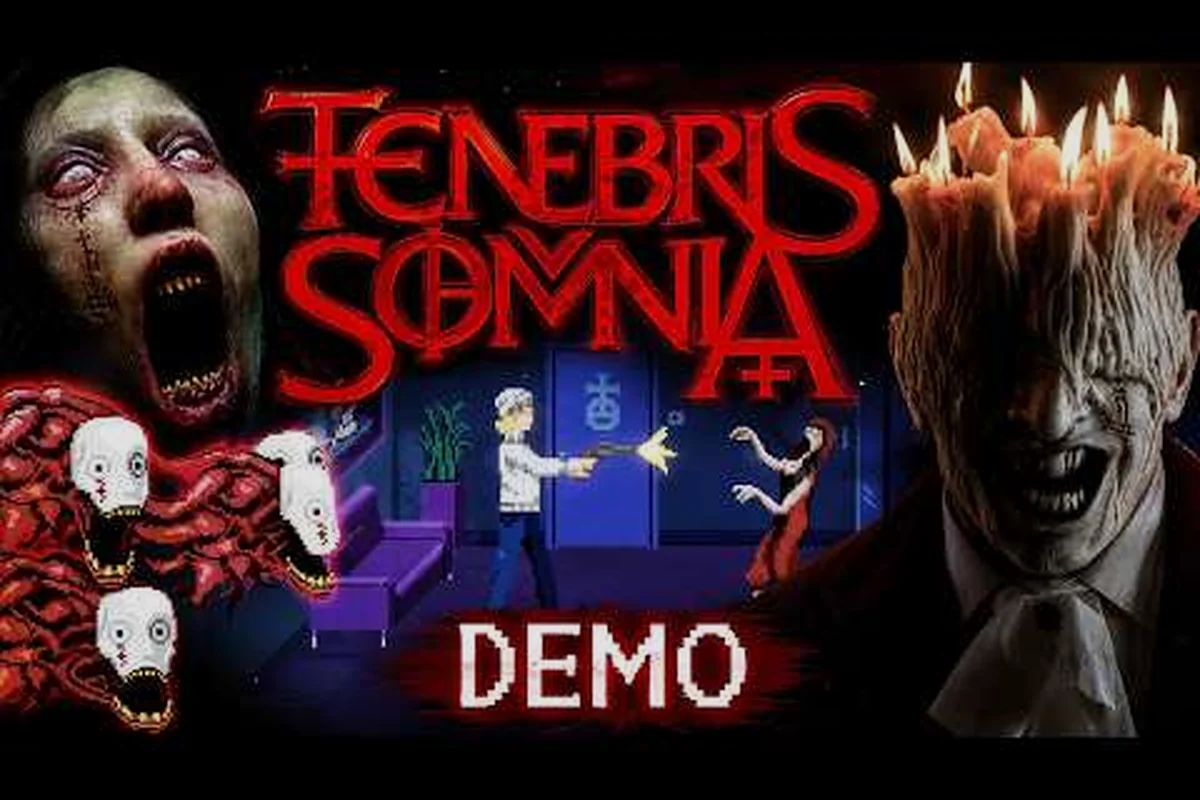
Julia's return to a bloodstained apartment sets the entire tone for the Tenebris Somnia story walkthrough, because what looks like a simple key handoff becomes a descent into ritual horror, FMV hallucinations, and a final chapter that reframes every pixel you have just played. This tenebris somnia game walkthrough follows the full narrative arc from the moment she crosses the threshold to the closing reveal, mapping the puzzle beats, the live-action inserts, and the nightmare detours that connect the chapters. Players who want a chapter-by-chapter puzzle companion for the early acts will find the building blocks here, while those chasing the true ending can use the FMV-by-FMV breakdown to predict where the story pivots.
According to the official Tenebris Somnia Steam page, the title is a survival horror adventure in the vein of Silent Hill and Resident Evil, rendered in 8/16-bit pixel art, with professionally shot live-action sequences that reframe the same events from another point of view. That double-layer storytelling is the heart of the story walkthrough: the pixel side is what you solve, and the FMV side is what it actually means.
Story Setup: What Julia Walks Into
The Apartment, The Key, and The First Lie
The story begins on a deliberately ordinary errand. Julia is bringing back the apartment key to her ex-boyfriend, a filmmaker, because the relationship is over and lingering in his place has become painful. When she enters, nothing is right: broken glass crunches underfoot, an unidentified red gunk pools on the floor, and a stack of occult books sits on a desk that should be holding scripts. The apartment is the entire first act, and it is a masterclass in environmental storytelling.
Puzzle-wise, the apartment is a tutorial disguised as a domestic scene. Julia's inventory stays tiny in the early beats, and most progress comes from combining two or three off-screen items before using them on an obvious landmark. Players chasing a tenebris somnia full game walkthrough should treat the apartment as the "grammar" of every later chapter: a key opens a door, a key opens a lockbox, a key opens a memory.
The first FMV insert arrives before the apartment finishes teaching you the rules. According to Rock Paper Shotgun's preview, the live-action footage is shot and acted by a professional crew and pushed into the same frame as the pixel world. The first insert is short, ambiguous, and mostly concerned with mood: a figure that may be the ex-boyfriend, a room that looks like the apartment but is not, a sound that could be breathing or could be tape hiss. You are meant to notice it, not understand it.
The Genre Contract Being Signed
Because the story mode is built around its two visual styles, the walkthrough has to teach you how to read them in parallel. The pixel world is the "truth" of Julia's physical journey, the inventory she carries, the wounds she takes, and the doors she opens. The FMV world is the "meaning" of those events, a counter-narrative that runs in the margins of every chapter. A tenebris somnia game walkthrough that ignores the FMV side will read like a puzzle FAQ; a walkthrough that ignores the pixel side will read like a film review. The story only resolves when you hold both.
| Layer | What It Shows | How It Progresses | Player Action |
|---|---|---|---|
| Pixel Apartment | Julia's literal body and inventory | Door-by-door, item-by-item | Solve puzzles, manage health, fight or flee |
| FMV Inserts | A second perspective on the same events | Cutscene-driven, not player-controlled | Watch, compare, infer |
| Occult Lore Books | Foreshadowing of the ritual logic | Found in clusters, sometimes optional | Read to predict chapter twists |
| Audio Stings | Sonic transitions between layers | Triggered by room entry or puzzle solve | Listen for the tape-hiss change |
Players who want a per-room puzzle map for the opening act can pair this section with the full chapter-by-chapter walkthrough to keep the FMV beats in sync with the pixel rooms.
The Five-Chapter Spine of the Story
How The Chapters Are Structured
The tenebris somnia full game walkthrough divides naturally into five chapters, and the pacing is consistent: each chapter opens in a new enclosed space, introduces a new subtype of monster, adds one new survival rule, and ends with an FMV insert that recontextualizes the prior twenty minutes. The story does not branch in the conventional sense; you do not get a faction choice or a loyalty meter, but you do get soft alignment pressure based on which FMV details you linger on and which pixel objects you interact with first.
| Chapter | Setting | Core Survival Rule | FMV Hook |
|---|---|---|---|
| Chapter 1 | The apartment and hallway | Light and sound govern enemy aggression | A figure in the filmmaker's editing bay |
| Chapter 2 | The basement and storage level | Limited ammo, melee-first combat | A reel of footage Julia was never meant to see |
| Chapter 3 | The hospital/insane asylum detour | Healing items become scarce, rationing matters | An interview that may or may not be with Julia |
| Chapter 4 | The film studio lot | Set-piece puzzles and chase sequences | A "cut" that never ended |
| Chapter 5 | The ritual chamber and final chapter | Everything you have learned clicks into place | The reveal of who is actually filming whom |
Chapter 1 — Key Locks and Hallway Geometry
Chapter 1 is the apartment, then the building hallway, then a return to the apartment that no longer looks the same. The story walkthrough is straightforward on the surface: find the right key for the right lock, avoid the first creature (a hunched, jerky thing that dislikes the lamp), and reach the hallway where the building's geometry stops making sense. The FMV insert at the end of the chapter shows a man at a desk reviewing footage that looks exactly like the apartment you have just left. The question that lands is: who is the "filmmaker" in this story, and is the apartment the set, or the screen?
The combat tutorial in this chapter is intentionally underwhelming. You start with a flimsy melee weapon and almost no ammo. The first creature goes down in two to three hits if you bait it toward the lamp and strike while it flinches from the light. The game is teaching you that light is a resource, not a backdrop, which becomes a survival rule in every later chapter.
Chapter 2 — Basement and Storage Level
Chapter 2 drops you into a basement full of storage cages, pipes that sweat red gunk, and the second creature subtype: a faster, quieter pursuer that patrols set routes. The tenebris somnia game walkthrough for this chapter is mostly about routing: which corridor to clear first, which cage to loot, and which pipe to lure the pursuer into so you can backtrack for the locked cage on the far side. Health pickups are rare, and the chapter punishes the player who treats every encounter as a fight.
The FMV insert at the close of Chapter 2 is the first one that feels like evidence. Julia, in live action, is shown watching a reel of footage. The footage is grainy, slightly out of sync, and shows a version of the basement you are about to leave. It is the moment the story stops pretending the FMV layer is atmosphere and starts treating it as a parallel track of events the pixel side cannot see. Players who want a deep dive on the basement routing can check the chapter 5 walkthrough for the late-game evolution of the same pursuer logic.
Chapter 3 — Hospital and Asylum Detour
Chapter 3 is where the story leans hardest into its Silent Hill DNA. The setting is a hospital/insane asylum, the soundtrack pushes analog distortion, and the enemies become humanoid, almost patient, and far more aggressive in groups than the basement crawlers were. Healing items in this chapter are rationed, and the player is forced into a choose-your-battles economy: do you heal now and face the next gauntlet at low max HP, or do you push forward and gamble on finding a med cabinet?
The FMV insert is the longest yet and operates like a confessional interview. A woman who looks like Julia sits across from a man whose face the camera refuses to settle on. She is asked about the apartment, about the filmmaker, and about what she saw in the basement. Her answers do not match the pixel timeline, but they rhyme with it. The story is telling you that the FMV layer is not the truth and the pixel layer is not the truth, but the truth lives in the gaps where they disagree.
| Resource | Chapter 1 | Chapter 2 | Chapter 3 | Chapter 4 | Chapter 5 |
|---|---|---|---|---|---|
| Healing items | Plentiful | Moderate | Scarce | Moderate | Scavenged |
| Ammo | Almost none | Limited | Mixed | High (set-piece only) | Symbolic |
| Light source | Hand lamp | Flashlight | None (flicker only) | Stage rig | Ritual torch |
| Save rooms | 1 | 2 | 2 | 1 | 0 |
Chapter 4 — Film Studio Lot
Chapter 4 is the most cinematic chapter in the tenebris somnia full game walkthrough, and that is the point. The setting is a backlot film studio: a sound stage dressed to look like the apartment, a green-screen room, an editing bay, and a loading dock where the props from the earlier chapters are stacked like discarded memories. The puzzle design here is set-piece first, exploration second: each room is a stage, and each "shot" is a puzzle where you set the lighting, position the actors (creatures), and call "action" by triggering the right interaction in the right order.
The combat is the lightest it has been since the apartment, because the story wants you moving through the lot, not fighting through it. The pacing is fast, the camera pulls wider than usual, and the FMV insert at the chapter's end is the most explicit yet. A "cut" is called on a scene, and the scene does not stop. The actors remain in character, the camera does not pull back, and the director's voice on the loudspeaker is asking for one more take while something off-screen is no longer acting.
Chapter 5 — Ritual Chamber and Final Chapter
The tenebris somnia final chapter is the ritual chamber, and the walkthrough here is less about surviving and more about understanding. The pixel side of the chapter is a linear climb through a space that fuses the apartment, the basement, the asylum, and the studio into one Escher-like interior. The ritual logic the occult books have been hinting at since Chapter 1 becomes a literal navigation tool: certain objects now unlock certain doors not because they fit, but because they "remember" their use.
The final FMV insert is the reveal. Julia is the subject of the film. The filmmaker ex-boyfriend is not a separate character inside the story, he is the camera, and the camera has been filming her the entire time. The creatures are not invading the apartment, they are the apartment; the apartment is the set, the set is the ritual, and the ritual is the frame around Julia that the filmmaker built and Julia has been unknowingly walking through since she walked in to drop off the key. The ending of the tenebris somnia ending walkthrough is a re-read, not a conclusion: every chapter is a shot, and the final chapter is the one where the camera finally turns around.
Reading the FMV Inserts Like a Second Script
Why The Live-Action Footage Matters
The story walkthrough cannot treat the FMV inserts as cutscenes to fast-forward through, because they carry about forty percent of the narrative load. The official store page describes the cinematics as scenes shot from a second viewpoint, using real actors and practical-effects makeup handled by a professional Argentine film team. That is a description of craft, but it is also a description of intent. The FMV layer is not decoration; it is the second point of view the title is built around.
In practice, this means the inserts run on a different clock than the pixel chapters. A pixel chapter might take you forty minutes to clear, but the FMV insert that bookends it is only two to four minutes long and contains one or two narrative beats that the pixel chapter is too compressed to deliver. The story walkthrough's job is to flag those beats and tell you what they imply for the next chapter.
| FMV Insert | Location in Story | Pixel Counterpart | Implication |
|---|---|---|---|
| Insert 1 | End of Chapter 1 | The filmmaker's editing bay | Someone is reviewing footage of the apartment |
| Insert 2 | End of Chapter 2 | The basement reel | The "filmmaker" is documenting Julia without her knowledge |
| Insert 3 | End of Chapter 3 | The asylum interview | Julia's memory and the footage are out of sync |
| Insert 4 | End of Chapter 4 | The unending "take" | The film has stopped being a film |
| Insert 5 | End of Chapter 5 | The camera turns around | Julia has been the subject the entire time |
How To Use The Inserts As Puzzle Hints
The tenebris somnia game walkthrough treats each FMV insert as a forecast. If Insert 2 shows a basement object that Julia has not yet encountered in the pixel world, the next chapter's first room almost always contains that object, and the puzzle it enables is almost always the chapter's gate. If Insert 3 shows a character you have not met, that character becomes a Chapter 3 or Chapter 4 enemy, and the way the character is lit in the insert is a hint about their light-sensitivity rule in the pixel version.
Players who want a focused breakdown of how the live-action sequences interlock with the pixel puzzles can use the cutscene and nightmare walkthrough as a companion read; it treats each insert as a chapter beat and cross-references the pixel triggers that unlock them.
Survival Rules The Story Quietly Teaches
Light, Sound, and The Inventory Economy
The tenebris somnia full game walkthrough is not a combat walkthrough, and the survival layer is designed to be light enough to let the story breathe. Light is the single most important resource across the entire run. The lamp in Chapter 1 becomes the flashlight in Chapter 2, the flickering ceiling fixtures in Chapter 3, the stage rig in Chapter 4, and the ritual torch in Chapter 5. Every chapter hands you a new light source, and every chapter raises the cost of using it: batteries, fuel, ritual components, sanity.
Sound is the second resource, and it is subtler. Loud actions (running, melee, breaking glass) attract the faster creature subtypes, while careful movement (walking, crouching, setting down objects) keeps the audio layer calm and the creatures in their patrol loops. The game never tells you this; the walkthrough has to, because most of the deaths in the community-reported "nightmare" runs come from a player who broke a bottle and pulled two extra enemies into a room with no exit.
| Survival Rule | When Introduced | Where It Returns | How The Story Uses It |
|---|---|---|---|
| Light as a deterrent | Chapter 1 | Every chapter | The filament in Julia's hand lamp is a literal countdown |
| Sound as a lure | Chapter 1 | Chapter 2 onward | Glass breaks are a story beat, not just a resource |
| Ammo is optional | Chapter 2 | Chapter 4 | Melee always works; ammo is for emergencies |
| Healing is rationed | Chapter 3 | Chapter 5 | Med cabinets are puzzles, not rest stops |
| Inventory is small | Chapter 1 | Every chapter | Combining is the language; hoarding is a trap |
Combat As Conversation
Combat in Tenebris Somnia is short, lethal, and almost always avoidable. The creatures telegraph their attacks with a one-second wind-up that the player learns to read on the second or third encounter. Stamina is the hidden currency, not ammo, and the walkthrough is honest about it: most boss-style encounters can be cleared by waiting for the wind-up, sidestepping, and landing one or two hits before re-positioning. The game is not asking you to master the combat; it is asking you to stop thinking of the combat as the point.
The tenebris somnia game walkthrough treats combat the same way. Each encounter has a "bait" (a light, a sound, an environmental object), a "tell" (the wind-up), and a "window" (the half-second after the dodge). Learn the three, and the combat stops being a wall between you and the story. Players who want a focused late-game breakdown of the final encounter can pair this section with the last boss walkthrough to understand how the ritual chamber reuses the same rules at a higher tempo.
The Ending: What The Tenebris Somnia Ending Walkthrough Resolves
The Surface Ending
The tenebris Somnia ending walkthrough resolves on two layers, and the surface layer is the one most players see on a first run. Julia reaches the back of the ritual chamber, the final FMV insert plays, the camera turns around, and the credits roll. The pixel side of the game ends with Julia walking out of the apartment the way she walked in, except the apartment is no longer the apartment, the key is no longer the key, and the door she opens does not lead to the hallway.
This is the ending the walkthrough has been foreshadowing since Chapter 1. The ex-boyfriend's "film" is the frame, Julia is the subject, and the creatures are the parts of the frame the subject has been unable to see from inside. The pixel world ends where the FMV world began: with Julia realizing she is in a film that was always already rolling.
The Deeper Ending And The FMV Re-Read
The deeper ending, the one the story walkthrough is really built to deliver, is the re-read. After the credits, a second pass through the FMV inserts makes it clear that the inserts were not parallel events; they were the same events shot from a wider lens. The "filmmaker" is the camera, but the camera is also the apartment, and the apartment is also the ritual. The creature subtypes, the light and sound rules, the inventory economy, and the chapter pacing all become a single grammar: the grammar of being filmed without consent, in a frame you cannot see from inside.
| Story Beat | First-Pass Reading | Second-Pass Reading |
|---|---|---|
| Julia enters the apartment | Returning a key to an ex | Walking onto a set she was always meant to be on |
| The red gunk | A mess from a fight | A practical-effects marker for a shot the camera has not called cut on |
| The occult books | An ex's creepy hobby | A ritual script the "filmmaker" has been working from |
| The creatures | Monsters chasing Julia | Subjects, audience, and crew of the film at once |
| The final FMV insert | A reveal that breaks the fourth wall | The frame turning to show the frame |
Practical Tips For A Clean Story Run
Prep Before You Start
The tenebris somnia game walkthrough runs cleaner if you start with the right expectations. Treat the inventory as tiny and the chapters as short. Save often when the game offers a save point (the lamp-lit rooms) and do not hoard healing items. Read the occult books even when the game does not require it, because they are the closest thing the story has to a glossary, and the late-chapter puzzles lean on their language.
Mid-Run Discipline
The mid-run is where most story runs drift. Players who skip the optional rooms in Chapter 2 miss the FMV setup for Chapter 3, and players who rush Chapter 3 often arrive at Chapter 4 with a full med kit and no idea why the healing economy suddenly felt fair. The tenebris somnia full game walkthrough's discipline rule is simple: do not outpace the FMV. If you have cleared two pixel rooms since the last insert, slow down and check the environment for the trigger.
| Phase | Discipline Rule | What Happens If You Skip It |
|---|---|---|
| Chapters 1–2 | Read every occult book you find | The Chapter 3 ritual language stops making sense |
| Chapter 3 | Ration heals, do not panic-medic | You will arrive at Chapter 4 broke and exposed |
| Chapter 4 | Treat each room as a single take | The set-piece puzzles lose their cinematic order |
| Chapter 5 | Do not skip dialogue with the ritual objects | The ending reads as a cutscene, not a re-read |
Late-Run Calibration
By the time the tenebris somnia final chapter begins, the walkthrough's job is mostly to keep you in the right headspace. The combat is a final exam over the rules you have been learning since the apartment, the puzzles are a final exam over the ritual language the occult books have been teaching, and the FMV inserts are a final exam over the parallel-timeline reading you have been practicing since Chapter 2. The story is not going to hand you anything you have not already seen, but it is going to ask you to use it all at once. The walkthrough's late-run advice is to slow down, listen to the audio stings, and trust the grammar the apartment taught you in the first twenty minutes.
Frequently Asked Questions
How long is the Tenebris Somnia story walkthrough from apartment to final chapter?
A first-run tenebris somnia story walkthrough typically lands between five and seven hours, depending on how much time you spend reading occult books and re-watching FMV inserts. Players who skip optional rooms or rush the asylum detour can finish in under five hours, while completionist players who want every FMV trigger and every hidden lore note often push past eight.
Do I need to find every FMV insert to get the true ending?
The tenebris somnia ending walkthrough confirms the true ending is gated by story progression, not by collectible count, so missing an insert will not lock you out. However, the inserts are the second half of the narrative, and skipping enough of them turns the final FMV into a non-sequitur rather than a re-read. Players chasing meaning should watch every insert at least once.
Is there a choice system in the story mode walkthrough?
No branching dialogue or faction choice exists in the tenebris somnia game walkthrough. The story is a single linear path, but the player's soft alignment with the FMV layer (which inserts you linger on, which pixel objects you interact with first) shapes the texture of the ending rather than the ending itself. The final chapter is the same room, but the final FMV feels different depending on how much of the parallel track you have absorbed.
What is the hardest chapter in the full game walkthrough?
According to community data reported by players, Chapter 3 (the asylum) and Chapter 5 (the ritual chamber) are the tightest difficulty spikes. The asylum is hard because healing is rationed and the enemies are aggressive in groups, while the ritual chamber is hard because the puzzle logic is a final exam over the occult language the rest of the game has been teaching. Chapter 1 is rarely a wall, and Chapter 4 is the easiest if you treat it as a set-piece tour rather than a combat gauntlet.
Does the Tenebris Somnia final chapter differ between runs?
The final chapter's location and the final FMV insert are identical across runs, but the texture of the ending changes with how you played the prior four chapters. Players who ignored the FMV layer report a flat, surprise ending. Players who read every occult book and watched every insert report the re-read ending, where the final camera turn reframes the entire five chapters. The walkthrough's advice is to play once for the story and once for the re-read, because the game is built to reward both passes.