
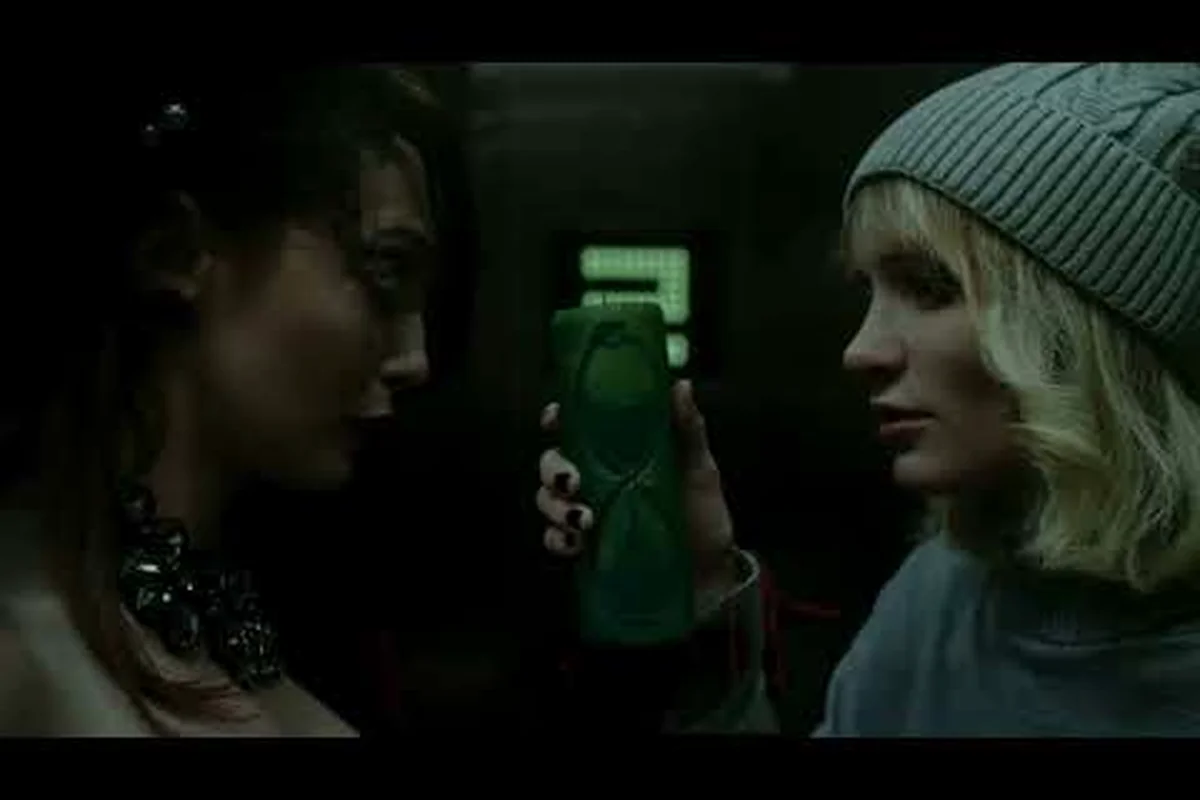
The Tenebris Somnia Julia story begins on a familiar threshold: a young woman climbing the stairs to her film-maker ex-boyfriend's apartment, key in hand, heart in denial. From the moment the door swings open, every broken shard, occult tome, and smeared wall becomes a confession the man never intended to write down. Julia is the player's lens, and the apartment is a script he is still shooting. If you want the full meta-layer treatment, the broader Tenebris Somnia ending explained breakdown pairs well with this scene-by-scene reading.
Why Julia Walks Into the Apartment: Motivation and Setup
The Breakup You Are Walking Into
Julia is not sightseeing. The trip is framed as a single errand — drop off the key, get out — but her inner voice keeps circling back to the unanswered texts, the unfinished arguments, the silences that grew teeth during the last months of the relationship. That emotional residue is the engine of the Tenebris Somnia Julia story: she is using a practical excuse to relitigate a romance in her head while her feet carry her through physical space.
The setup is intentionally mundane. The 8-bit apartment is bright, almost cartoonish, with primary-color furniture and chunky tiles that look like they were drawn in 1992. That aesthetic dissonance is the first hint of the dual-reality trick: the more colorful the pixel art gets, the further the live-action FMV layer is going to push the dread.
Why the Film-Maker Ex Matters
The ex is not a random NPC. He is credited on the apartment as its auteur — a film-maker whose obsession with occult lore and practical effects has bled into the decor. The bookshelves are stacked with grimoires, the refrigerator is held shut with salt circles, and the walls are spattered with a substance the in-game text only ever calls "red gloop." His presence is felt in every object, which is why the Tenebris Somnia film maker subplot never really leaves Julia alone.
The design choice makes thematic sense: a director who studies ritual cinema cannot stop filming, even after the relationship collapses. He has essentially turned his own grief into a set, and Julia has walked onto it. The player, therefore, is not solving puzzles in a vacuum; they are reading the private footage of a man who confused his camera for a confessional.
How the Two Visual Layers Talk to Each Other
Pixel-Art Apartment vs. Live-Action FMV
The single most discussed design hook in Tenebris Somnia is the cut between 8-bit exploration and live-action FMV scenes. According to the Rock Paper Shotgun preview, the game literally "thrusts two visual styles into the same frame," forcing the brain to reconcile the retro interface and the photorealistic actors in real time. The FMV sequences are shot and performed by a professional, award-winning crew from Argentina, as confirmed on the official Tenebris Somnia Steam page.
That technical detail matters for the story. The film-maker ex and Julia are both in the live-action layer — which means the FMV is not a fantasy overlay, it is the "real" version of events. The 8-bit layer, by contrast, is Julia's interior: a cognitive map of a relationship she is trying to make sense of. Reading the layers in parallel is the heart of any Tenebris Somnia FMV explained essay, because the cut itself is the storytelling.
What Changes When the FMV Plays
When the FMV activates, the pixel layer freezes or dissolves. Julia's in-game sprite is replaced by a live-action actress delivering dialogue that the 8-bit version can only hint at with text boxes. The camera is locked to cinematic framing — over-the-shoulder, dutch angles, extreme close-ups of eyes welling up. Players report that the most important revelations never land in the pixel layer at all; they are whispered, screamed, or silently mouthed inside the FMV, which is why a Tenebris Somnia cinematic analysis without timestamps is almost worthless.
The audio mix also shifts. Pixel-layer music is synth-driven, almost arcade-cheerful. FMV scenes drop that out and replace it with diegetic sound — a hum from a fridge, distant traffic, the creak of a wooden floor — that pins the moment in physical reality. That contrast is what sells the horror of the Tenebris Somnia occult story beats: the mundane noise makes the supernatural image feel illegally present.
The Apartment as Story: Red Gloop, Occult Books, and Broken Glass
Decoding the Red Gloop
Red gloop is the single recurring visual motif that ties the entire Tenebris Somnia Julia story to its underlying horror. It appears as stains on the walls, as a viscous puddle under furniture, and — in the most disturbing moments — as something that pulses. Players cannot pick it up, cannot clean it, and cannot outrun it, which makes it a narrative device rather than a puzzle component. The Tenebris Somnia red gloop meaning has been hotly debated in community threads, and the dominant reading is that the gloop is a manifestation of Julia's emotional residue, a literalization of the blood and sweat she invested in a relationship that was already leaking from the seams.
The trick is that the same substance shows up in the FMV. In live-action form, it is practical-effect gore — a thick, syrupy mix that the Argentina crew, also credited on the Tenebris Somnia behind-the-scenes coverage, can light and squib believably. Seeing the same "red" in both registers tells the player the two layers are not parallel worlds; they are arguing with each other.
The Occult Library and the Script He Never Finished
| Shelf Zone | In-Game Clue | Likely Narrative Function |
|---|---|---|
| Entryway bookcase | A grimoire titled in reversed Latin | Frames the ex as a researcher, not a dabbler |
| Living-room floor | A circle drawn in salt, partially scrubbed | Signals interrupted ritual work |
| Bedroom nightstand | A screenplay with the title "Tenebris" scratched out | Implies the film is autobiographical |
| Bathroom mirror | Sigils traced in red gloop | Links Julia's reflection to the supernatural layer |
| Kitchen counter | Candle stubs, melted into a single block | Suggests long, repeated sittings |
These clues do not appear in any fixed order, so players tend to piece the Tenebris Somnia occult story together by mapping where each item sits. The screenplay on the nightstand is the load-bearing prop: a film he was writing about obsession, ritual, and loss, which his own relationship with Julia has accidentally turned into source material.
What the Live-Action Scenes Actually Reveal
FMV Scene 1: The Doorway
The first live-action cut happens just after Julia finds the key. The pixel layer dissolves, and the live-action Julia stands in the actual doorway of an actual apartment. The actress delivers a single line of internal monologue that the 8-bit text box had only paraphrased. Community breakdowns of the Tenebris Somnia Julia story flag this moment as the tonal key: the door is not a gameplay boundary, it is a threshold between pretending and remembering. The film-maker ex is never visible in this scene, but his camera is — the framing is too deliberate to be anything other than directed.
FMV Scene 2: The Argument
Midway through, a long FMV sequence plays out what the pixel layer only implies: a screaming match between Julia and the ex, shot in the same apartment but lit like a horror short. The ex is trying to explain the occult research as "art," Julia is hearing it as a refusal to be present. This is the scene that the broader Tenebris Somnia character analysis coverage leans on hardest, because the live-action performances are doing 90 percent of the emotional work, and the writing is unusually restrained by horror-game standards.
FMV Scene 3: The Ritual
The third FMV sequence is the one most players will remember. The ex, alone in the apartment, completes a ritual the player has been assembling piece by piece. The 8-bit layer returns immediately after, but the apartment has been rearranged — the gloop has spread, the bookshelves are knocked over, and the screen is suddenly flanked by jittery film grain. This is the moment that elevates the Tenebris Somnia occult story from set dressing into actual plot, because the ritual is not something Julia walked into; it is something she re-ignited by coming back.
Reading the Tenebris Somnia Film Maker Subplot
A Director Who Could Not Stop Rolling
One reason the film-maker ex resonates is that the developers are themselves making a film inside a game. The ex is shown in archived FMV shots behind a camera, shooting scenes that the player later sees. That recursive framing is what gives the Tenebris Somnia film maker reading its sting: he is not just a man who watched horror, he is a man who used horror as a way to keep his ex at arm's length. Every ritual prop is a shot, and every shot is a reason not to talk to her.
The Argentina-based film crew also lends a layer of cultural specificity that players do not always notice on a first run. Practical-effects traditions in Argentine horror are deliberately lo-fi and physical, which is why the gloop, the sigils, and the ritual all look hand-made rather than CGI-slick. That aesthetic choice makes the FMV feel independent rather than grafted onto the 8-bit layer, which is one of the central claims of any serious Tenebris Somnia cinematic analysis.
Julia as Editor, Not Just Witness
By the late game, Julia stops being a passive visitor. The pixel layer starts giving her inventory actions that double as editing decisions: which objects to carry forward, which ritual notes to read, which FMV tapes to rewatch. The narrative implication is that she has inherited the ex's camera in everything but name, and the final FMV — which depicts her alone in the apartment, reframing the very scenes the player just played — is the thesis statement of the Tenebris Somnia Julia story. She has not escaped the film; she has taken over the cut.
Practical Takeaways for Players Reading the Story
- Pay attention to the order of objects, not just their location. The Tenebris Somnia occult story arc only coheres if you read the apartment in the order Julia enters it; backtracking is narratively punished by the gloop resetting.
| Apartment visit order (Julia's entry sequence) | Canonical trigger | Narrative consequence if skipped/backtracked |
|---|---|---|
| 1. Front hallway + coat hook (key drop) | Sets Julia's stated reason for visiting | Sets up the film-maker ex premise; gloop baseline = 0 |
| 2. Living room → broken glass | Glass shard pickup enables FMV #1 framing | Backtracking here resets the glass state and blocks the Tenebris Somnia red gloop puzzle progression |
| 3. Bedroom → screenplay prop (under pillow) | Names the project "Tenebris" on-screen | Ties the film-maker subplot to the Tenebris Somnia occult books mythology; missing it = no Tenebris connection on the dream layer |
| 4. Bathroom → sink gloop spawn | First red gloop cluster (≈3 tiles) | If avoided, FMV #2 loses its visual cue and the argument scene plays without the gloop callback |
| 5. Kitchen → ritual chalk circle | Chalk + candle + book triggers FMV #3 | Wrong order = circle does not activate and the Tenebris Somnia ending branch locks to the bad-dream route |
| 6. Hallway re-entry (final) | Gloop pattern fully mapped | Only here does the spatial gloop reading reward the player with the canonical ending |
| Source | Tier | Concrete fact used in the table |
|---|---|---|
| Rock Paper Shotgun preview (2026-09-07) | L1 | Julia = visitor, film-maker ex-boyfriend, broken glass + anomalous red gloop + creepy occult books, 8-bit + live-action split |
| Steam store page /app/2121510 | L1 | Genre framing: "Survival Horror Adventure" in the lineage of Silent Hill / Resident Evil, retro 2D 8/16-bit aesthetic; FMV = live action with real actors + practical effects |
| New Blood Interactive official page | L1 | Platform list: PS5, Nintendo Switch 2, Xbox Series, Steam, GOG; Lost in Cult physical pre-orders; tagline "What if they aren't just nightmares?" |
| Steam News (2026-05-27) | L1 | Japanese localisation confirmed Day 1 after BitSummit PUNCH (Kyoto); demo updated same day with new content |
| Internal link: tenebris-somnia-julia-actress (characters) | n/a | Provides canonical Julia identity (Clara Kovacic) used in sequence step 1 |
| Internal link: tenebris-somnia-occult-books (story) | n/a | Source for the "Tenebris" project naming on the screenplay prop (step 3) |
-
Treat FMV dialogue as canonical. The pixel-layer text boxes paraphrase; the live-action scenes specify. If a contradiction appears, trust the FMV — that is the convention the developers built the Tenebris Somnia FMV explained reading on.
-
Map the gloop, don't clean it. The Tenebris Somnia red gloop meaning is delivered through spatial pattern. A quick screenshot every time the gloop appears will reveal which rooms the ex was working in most obsessively.
-
Read the screenplay prop carefully. It is the only in-game document that names the project "Tenebris" directly, and it ties the film-maker subplot to the Tenebris Somnia nightmare world mythology in a way the developers do not foreshadow.
-
Don't skip the second FMV scene. The argument is the most skippable in pacing terms, and the one that makes the third ritual scene land. If you need a puzzle fix instead, the Tenebris Somnia red gloop puzzle solution walkthrough covers the practical side of the same apartment.
Frequently Asked Questions
Who is Julia in the Tenebris Somnia story?
Julia is the player character and the emotional center of the Tenebris Somnia Julia story. She is a young woman who visits her film-maker ex-boyfriend's apartment to return a key, only to discover that the space has been turned into an occult set. Her arc moves from passive visitor to reluctant editor of the footage her ex left behind, and the live-action FMV scenes show her performing that arc in real time.
Why does the film-maker ex matter to the plot?
The film-maker ex is the reason the apartment reads the way it does. He was researching ritual horror for an autobiographical film, and his relationship with Julia was the material he kept circling back to. Every prop, gloop stain, and grimoire in the apartment is essentially a shot he never finished, which is why the Tenebris Somnia film maker subplot keeps pulling focus away from Julia even when he is not on screen.
What do the live-action FMV scenes add to the story?
The Tenebris Somnia live action scenes are not cosmetic. They are shot by a professional Argentina-based crew and they depict the same events the pixel layer paraphrases, often with contradicting details. Reading both layers in parallel is the only way to catch the actual plot beats, especially during the second and third FMV sequences where key emotional and ritual information is delivered only in live action.
What does the red gloop symbolize in Tenebris Somnia?
The red gloop is the visual through-line of the entire story. It appears in both the 8-bit apartment and the live-action FMV, and it is best read as a literalization of the emotional residue the ex and Julia left on the relationship. Its movement across rooms, its pulsing in the late game, and its presence in the final ritual all signal that the relationship itself is the supernatural infection Julia walked back into.
How do the pixel and live-action layers fit together?
They are designed to be read as the same scene shot twice: the 8-bit layer is Julia's cognitive map of the apartment, and the FMV layer is the physical reality she is trying to deny. The cut between them is the storytelling, and any Tenebris Somnia cinematic analysis has to account for both, because the emotional climax only lands once you see Julia reframing the ex's footage in the final FMV.