
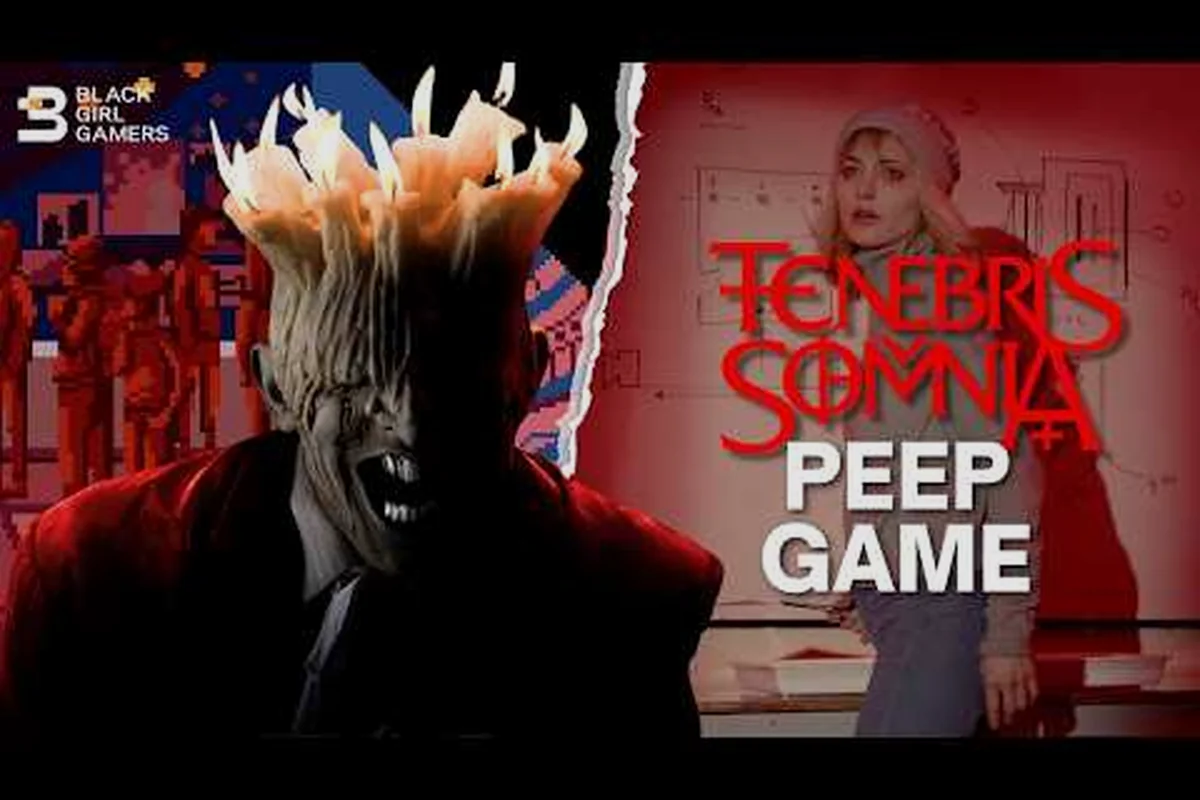
Diving into Tenebris Somnia theory reveals a horror experience where every pixel hides a metaphor, and Julia's story invites players to question whether the apartment they keep walking back into is real or dreamed. The game's split visual language — 8-bit corridors stacked on top of live-action FMV — has fueled some of the most passionate Tenebris Somnia theories in the indie horror community, with players trading screenshots and dissecting every frame of the Tenebris Somnia cutscenes for hidden clues.
The Core Mystery: Dream Logic or Dying Loop?
The central tenebris somnia theory shared by completionist players is that Julia is not actually exploring her ex boyfriend's apartment at all — she is trapped inside a recursive nightmare, and the live-action sequences are the only moments where her waking self briefly surfaces. According to the official Tenebris Somnia page on Steam, the game advertises a split perspective between retro gameplay and filmed cutscenes with real performers and practical-effects work, and that structural split is exactly what players map onto the nightmare-versus-reality interpretation.
Players who have finished the campaign note that Julia only ever speaks through the live-action segments, never through the 8-bit avatar. The 8-bit world is silent, mechanical, and disorienting; the FMV world is dimly lit, intimate, and quiet in a different way. When the camera cuts between them, the shift feels less like "puzzle room to cutscene" and more like "somnambulism to half-waking lucidity." That contrast is the foundation of most tenebris somnia theories about the loop structure.
| Visual Layer | Aesthetic | Sound Design | Narrative Role | Diegetic Reading |
|---|---|---|---|---|
| 8-bit gameplay | Bright 2D sprite, primary colors | Chiptune ambient + jump-scare stings | Puzzle/exploration shell | The nightmare, disassociated and symbolic |
| Live-action FMV | 16:9, desaturated, real lighting | Diegetic dialogue, room tone, breathing | Story beats + emotional truth | Lucid memory, the apartment as Julia remembers it |
| Transition frames | Stutter, scanline overlay, brief blackout | Low-frequency drone | Hard cuts | The threshold between states |
| End-of-chapter stills | Polaroid grain + handwritten captions | Optional soft piano | "Documentary" residue | Journal entries from an unreliable narrator |
The repetition of corridors, the same doorknobs, the same cracked tiles in slightly different positions — all of it reads, under this tenebris somnia metaphor, as a mind circling the same trauma while trying to make it fit into something solvable. If you want help parsing the very first hour of the game, the Tenebris Somnia beginner guide breaks down the early puzzles that quietly set up the dream framework.
The Ex Boyfriend as a Symbol, Not Just a Character
The tenebris somnia ex boyfriend reading goes deeper than a simple breakup arc. Most players interpret him less as a person Julia is visiting and more as a stand-in for the relationship itself — the apartment, the key, and the ritual of "returning what was borrowed" are all symbolic containers for emotional baggage. The fact that you control Julia through the 8-bit half, then watch a real actor deliver her lines in the FMV half, mirrors the way people often feel during breakups: performing functional tasks on the surface while the inner self is somewhere else entirely.
The Key as a Permission Token
The apartment key is the single most discussed prop in tenebris somnia symbolism discussions. Julia is returning it, which on the surface is closure. But the key is also a permission token — a literal mechanism that lets the player enter new rooms, open new doors, and unlock new horrors. Returning the key should end the game. It does not, because the apartment keeps generating new spaces, which is the game's clearest signal that the loop is psychological, not architectural.
Why the Apartment Keeps Shifting
The ex boyfriend's apartment is described by previews as being "full of broken glass, anomalous red gloop and creepy occult books" — and that triptych is itself a metaphor stack. Broken glass maps to shattered trust, the red gloop reads as blood but visually behaves like spilt paint (a creative project, something in-progress), and the occult books stand in for the stories people tell themselves about a partner after the relationship has already ended. None of those objects are random; each one is doing symbolic work that the 8-bit sprites signal but never explain outright.
Players comparing the apartment's layout across chapters have shared side-by-side screenshots in community threads showing that the floor plan mutates in subtle ways between visits. Doors that led to the kitchen in chapter 2 lead to a bathroom in chapter 4. A balcony that was open-air in chapter 3 is sealed shut in chapter 5. According to player reports, these shifts are most aggressive after Julia watches a particular FMV clip — which is one of the strongest pieces of evidence for the dream-loop reading.
FMV Cutscenes as the Story's Real Spine
The Tenebris Somnia cutscenes are not decoration. They are the only place where the game's emotional plot actually moves, while the 8-bit half exists to dramatize Julia's internal state. Rock Paper Shotgun's preview, which you can read at their Tenebris Somnia coverage, specifically calls out the visual clash as the game's "flashy twist," and the way that clash is structured — long stretches of sprite navigation interrupted by sudden human faces — is what gives tenebris somnia theory its fuel.
What Players Have Pulled from the Cutscenes
Community analysts who have logged multiple playthroughs and screen-recorded the FMV segments have catalogued recurring visual motifs that, taken together, build a consistent symbolic vocabulary. The table below summarizes the most commonly cited motifs and the readings they tend to support.
| Motif | First Appears | Where It Recurs | Most Common Reading | Confidence |
|---|---|---|---|---|
| Julia looking directly at camera | Chapter 1 | Every chapter transition | Breaking the fourth wall = the dream acknowledges the player | High |
| Red gloop on hands | Chapter 2 | After every "memory" FMV | Unprocessed emotion, guilt the character cannot name | High |
| Mirrors without reflections | Chapter 3 | Hidden rooms, post-boss | The self Julia is performing is hollow | Medium |
| Static TV snow | Chapter 4 | Before the hardest jumpscare | A brain seizing on a bad memory | Medium |
| The ex boyfriend's back turned | Chapter 2 | Climax sequence | Refusal to be seen = refusal to be known | High |
| Handwritten letters, never fully read | Chapter 5 | Endgame | The things people never say out loud | High |
The reason these motifs matter is that the 8-bit half of the game never comments on them. There is no dialogue box that says "Julia noticed the mirror," no tooltip that says "this gloop is symbolic." The player has to do that interpretive work themselves, which is why tenebris somnia theories tend to feel earned rather than spoon-fed.
For readers who want to follow the FMV half beat by beat, the Tenebris Somnia demo walkthrough shows how the demo version of the game seeds the same visual language you will see at full release, so you can practice the reading habit before the campaign commits to it.
Common Tenebris Somnia Theories, Ranked by Community Consensus
The indie horror community has been unusually disciplined about Tenebris Somnia theory, partly because the developer team — an award-winning Argentine film crew, according to the official New Blood Interactive site — is clearly working in a tradition of arthouse horror. Below are the most-discussed readings, ranked roughly by how often they show up in post-game threads, Discord screenshots, and YouTube essays.
| Rank | Theory | Core Claim | Supporting Evidence | Community Consensus |
|---|---|---|---|---|
| 1 | The loop is psychological, not physical | The apartment is Julia's grief rendered as architecture | Recurring corridors, keys that never close the loop, mirrored layouts | Strong |
| 2 | The ex boyfriend is a metaphor, not a person | He represents the relationship, the art, or Julia's creative self | His back is always turned; he never speaks in the 8-bit world | Strong |
| 3 | The 8-bit world is the dream, the FMV is the "real" | The retro layer is dissociative; the live-action layer is memory | Julia only emotes in FMV; the 8-bit avatar is silent and stilted | Moderate |
| 4 | Some FMV characters are Julia's internal voices | Multiple actors play fractured aspects of her psyche | Casting choices + line delivery + prop doubling | Moderate |
| 5 | The game is a riff on Silent Hill's psychonautic structure | Both games render trauma as walkable space | Visual grammar, the use of keys, the role of "home" | Moderate |
| 6 | The red gloop is a literal creature being born | The horror is the relationship becoming monstrous | Gloop behavior, post-FMV enemy spawns | Speculative |
| 7 | There is a "good" ending locked behind pacifism | Julia can choose to forgive and exit the loop | Counter-intuitive hidden flags reported by data miners | Speculative |
The two "speculative" entries at the bottom are worth flagging because they are based mostly on datamined content and pre-release previews, not confirmed by the shipping campaign. Treat them as community hypotheses rather than solved readings.
How to Read Tenebris Somnia's Symbolism on a First Playthrough
Most players go in expecting a survival horror adventure in the vein of Silent Hill, and they are not wrong — the Tenebris Somnia Steam listing explicitly positions the game in that lineage. But the symbolic layer is dense, and a few habits will make your first run more rewarding without spoiling any specific beats.
A Reading Order That Helps
-
Play the 8-bit half as a puzzle, not a story. The retro layer is mechanical; let it be mechanical.
-
Treat every FMV clip as a real scene. The acting is on purpose, the camera angles are on purpose, and the props are on purpose.
-
After each FMV clip, glance at the next 8-bit room before you solve it. Recurring objects (a chair, a window, a doorway) often get repositioned in ways that echo what you just saw.
-
If you are stuck on a puzzle, the Tenebris Somnia controls guide covers the input layer so the symbolic layer can stay in focus.
-
Save before boss fights. The hardest symbolic beats land right after a boss, and a clean save lets you rewatch the transition without replaying the puzzle.
A Glossary of Recurring Symbols
| Symbol | In-Game Form | Likely Meaning |
|---|---|---|
| Red gloop | Liquid obstacles + post-FMV residue | Unprocessed emotion, the thing you cannot name yet |
| Mirrors | Interactive objects that show empty sprites | A self Julia no longer recognizes |
| Keys | Inventory items, door-openers, end-of-chapter rewards | Permission, closure, and the lie that closure is enough |
| Recurring corridors | Identical-looking hallways with shifted doors | A mind circling the same memory |
| The ex boyfriend's turned back | Framing device in nearly every FMV clip | Refusal to be known; a relationship that was always half-present |
| Polaroids | End-of-chapter stills with handwritten captions | Julia's private journal, possibly unreliable |
These readings are not official, but they are consistent with how the developer uses the same visual grammar across chapters. When the same symbol shows up three times in different contexts, the fourth appearance is almost always meaningful, which is a useful habit to bring to a first run.
Reading the Nightmare as a Whole
The strongest tenebris somnia metaphor is the one the game never spells out: that the apartment, the ex, and the monsters are all the same thing — a relationship that Julia cannot stop re-entering, even after she has handed back the key. The 8-bit half is the part of the brain that says "this time I will solve it cleanly." The FMV half is the part of the brain that already knows clean solutions do not exist. The horror of Tenebris Somnia is that the player is asked to keep playing the 8-bit half long after the FMV half has already told them the answer.
That structure is why tenebris somnia theory has staying power. The game is short enough to finish in a long evening, but layered enough that the second and third playthroughs keep surfacing new connections, especially once you have learned to track which objects and angles the FMV clips share with the 8-bit rooms. The April 2026 Japanese announcement on the official Steam news page confirmed the title will ship in Japanese on day one, which is a useful reminder that the symbolic reading is being delivered by a team that has thought carefully about how visual grammar translates across languages — another reason the imagery, not the dialogue, is where the theory lives.
Frequently Asked Questions
What is the main tenebris somnia theory most players agree on?
The most widely shared tenebris somnia theory is that the apartment is not a real place but a recursive nightmare built from Julia's grief over the breakup, and the FMV cutscenes are the only moments where her waking self briefly surfaces. This reading is supported by the looping floor plans, the mirrors without reflections, and the fact that the 8-bit avatar never speaks.
Who is the ex boyfriend in tenebris somnia theories?
In most tenebris somnia theories, the ex boyfriend is read as a symbolic stand-in for the relationship itself rather than a literal character, which is why he is almost always filmed with his back turned and never speaks inside the 8-bit world. He represents the thing Julia is trying to return the key to — closure, history, or the version of herself that existed in that apartment.
How important are the FMV cutscenes to the story?
The tenebris somnia cutscenes are the spine of the story, while the 8-bit half exists to dramatize Julia's internal state. Almost every symbolic payoff — the red gloop, the mirrors, the turned back — is seeded inside an FMV clip and then echoed in the next retro room, so reading both halves together is what makes the symbolism legible.
Where does tenebris somnia symbolism come from?
The tenebris somnia symbolism draws on the visual grammar of arthouse horror, especially the Silent Hill tradition of rendering trauma as walkable space, the use of keys as emotional permission tokens, and the split-screen device of films like Wings of Desire. According to the official site, the live-action half is shot by an award-winning Argentine film crew, which is why the FMV scenes feel cinematic rather than game-like.
Is there a confirmed hidden ending tied to tenebris somnia theory?
No ending has been officially confirmed, but several tenebris somnia theories suggest a pacifist or forgiveness-flagged route unlocks a "good" ending where Julia exits the loop. Datamined content and community reports describe hidden flags, though players should treat any specific ending claim as speculative until verified against a shipped playthrough.